
Lionel Messi's 10 Greatest Career Moments Ahead of the 2026 World Cup
So many of the greatest sports moments feel like an ending, even if there’s still some story left to tell. In Lionel Messi’s career, this “moment” happened in Qatar during the 2022 FIFA World Cup.
Messi scored twice in the final, carried Argentina through every round, and eventually lifted the one trophy that had eluded him for nearly two decades. And while this seemed like the ideal storybook ending for his career, Messi still had a passion for the game and some fuel left in the tank.
That much became clear in the years that followed.
Instead of fading into the twilight of retirement, Messi kept playing and kept producing. A move to the Inter Miami CF brought him to a new stage, where he added one more chapter to a career that has already solidified him as one of the GOATs.
Internationally, he remained part of Argentina’s core, extending a journey that some many have assumed had reached its final destination in 2022. As the 2026 FIFA World Cup approaches, then, the question is whether he has one more run left in him.
At 39, that answer comes with some uncertainty. Fitness, form, and time itself are all factors. Still, the possibility of one last World Cup has fans excited to see what type of final chapter he’s able to write.
This is one key storyline that makes this year’s FIFA World Cup compelling. While the peak of Messi’s career may have come in Qatar, the path that led there tell a much more complete story of sustained brilliance from perhaps the greatest player the game has ever seen.
In that vein, let’s look back to the top 10 moments of Messi’s incredible career.
10. Inter Miami Arrival and Leagues Cup Title (2023)
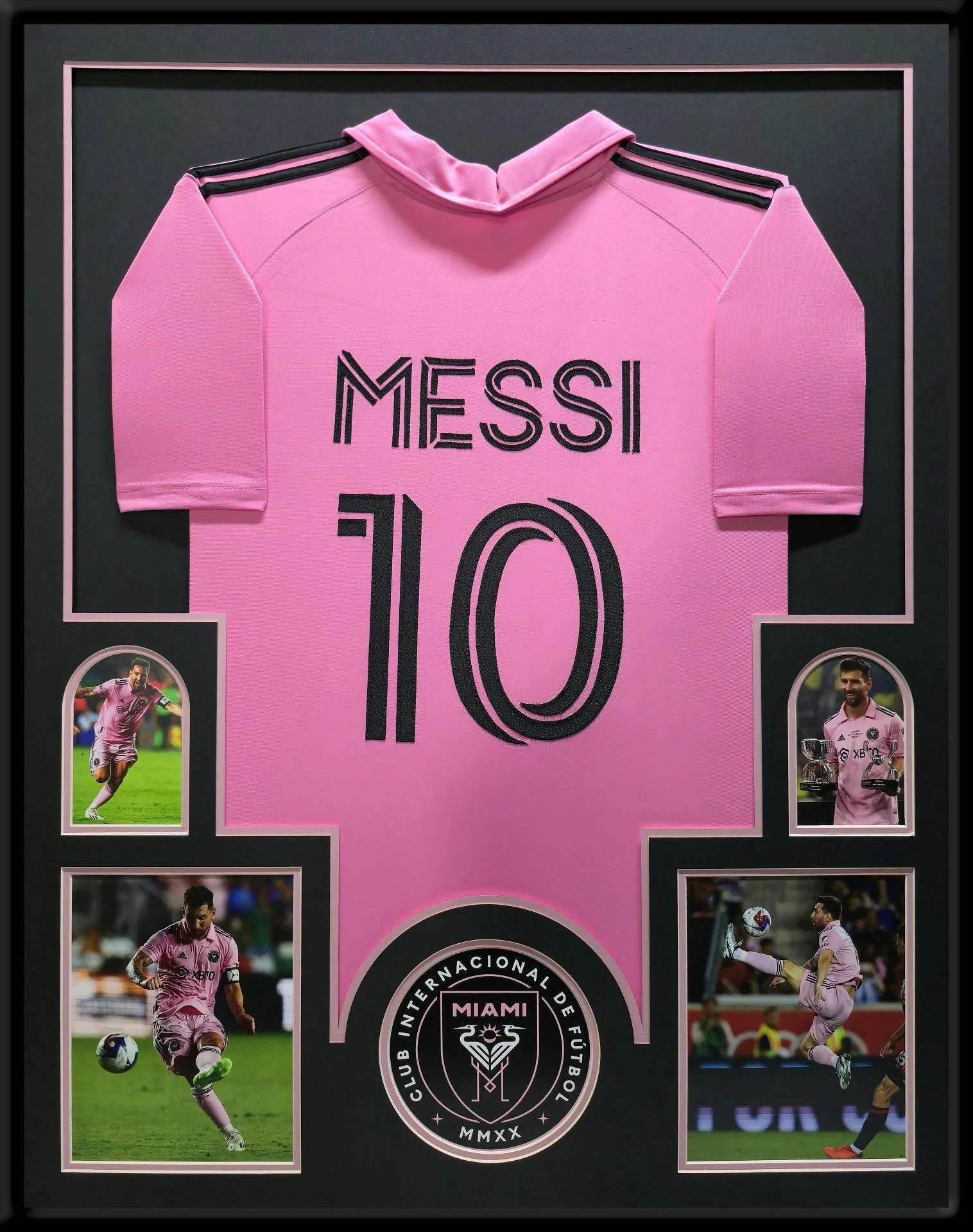
When Messi arrived at Inter Miami CF in 2023, it could have easily been seen as a late-career shift that provided him with a softer landing after the intensity of Europe. That idea lasted about one match.
He scored in his debut, then kept scoring, then carried a struggling team to its first trophy in club history with a run that proved Messi was bringing the intensity, not running away from it. He scored 10 goals in the tournament, including one in the final.
Instead of winding down, Messi expanded his greatness into North America. By the time Miami lifted the Leagues Cup, he had proven he’s still as competitive as ever leading into this summer’s World Cup.
9. Bayern Munich Semifinal – The Boateng Chip (2015)
By 2015, Lionel Messi had already done more than enough to define his legacy in the sport. But this is a moment that fans can point to and say, “That’s quintessential Messi.”
Late in the first leg of the Champions League semifinal against FC Bayern Munich, with the match still tight, Messi created separation from Jérôme Boateng with a quick shift that sent the defender off balance. He then lifted a delicate chip over Manuel Neuer.
The play was a culmination of precision, timing, and complete control that Messi orchestrated during an important moment — one fans continue to talk about years later. It also helped push FC Barcelona to a 3-0 win on the night.
This moment came during the FC Barcelona treble season under Luis Enrique, when Messi had evolved into being less of a pure winger and more of a central force who could dictate everything around him.
8. World Cup Final Loss and Golden Ball (2014)
Before the 2014 FIFA World Cup, Messi had already conquered club football with FC Barcelona, stacking trophies and records at a pace that made comparison almost pointless. What he didn’t have was a World Cup championship.
Argentina’s run to the ’14 World Cup Finals had Messi’s footprints all over it — four goals in the group stage, constant involvement in the buildup, and a level of domination that made every match feel tilted in his direction.
However, the final against Germany was a struggle, with Argentina losing 1-0 in extra time. When it ended, it left a strange image behind: Messi walking past the trophy he hadn’t won, then later standing alone holding the Golden Ball he earned as the tournament’s best player.
The contrast between his individual brilliance and the shortcoming of his team was unmistakable. For a while, that image defined the international chapter of his career as much as anything he had accomplished.
7. 91 Goals Across the Calendar Year (2012)
A lot of sports superstars have put together seasons where it seemed that everything just clicked, but few took it to the same level within their respective sports as Lionel Messi did in 2012. That’s the year he recorded an unbelievable 91 total goals across club and country play.
This came smack-dab in the middle of his peak years with FC Barcelona, when the Guardiola era had already reshaped how the game could be played and Messi had become its central figure. What made the number so jarring was its unrelenting consistency.
For a time, hat tricks stopped feeling rare and multiple-goal games seemed possible whenever he stepped on the pitch. He scored in every possible way, against every level of competition, without any real dip in production.
From that point forward, production at a historic level became something fans almost took for granted from Messi.
6. Bernabéu Solo Goal vs. Real Madrid (2011)
A Champions League semifinal at the Santiago Bernabéu against Real Madrid already brings its own intrigue. Add in the rivalry, the setting, the stakes, and you have a moment where anything memorable tends to stick.
What unfolded from there felt almost stripped down in its simplicity. Lionel Messi took the ball near midfield and kept going, slipping past defenders without breaking rhythm, carrying the play forward as if space was opening exactly when he needed it.
There wasn’t a dramatic pause or a sudden burst, but more of a steady unraveling of the defense until Messi slipped the ball past the goalie and into the net. The goal came in a 2-0 win for FC Barcelona.
This came during the height of Barcelona’s dominance, when Messi had grown into the central force of a system that revolved around his play. The goal offered a clear snapshot of this era.
5. Wembley Final, Barcelona vs. Manchester United (2011)
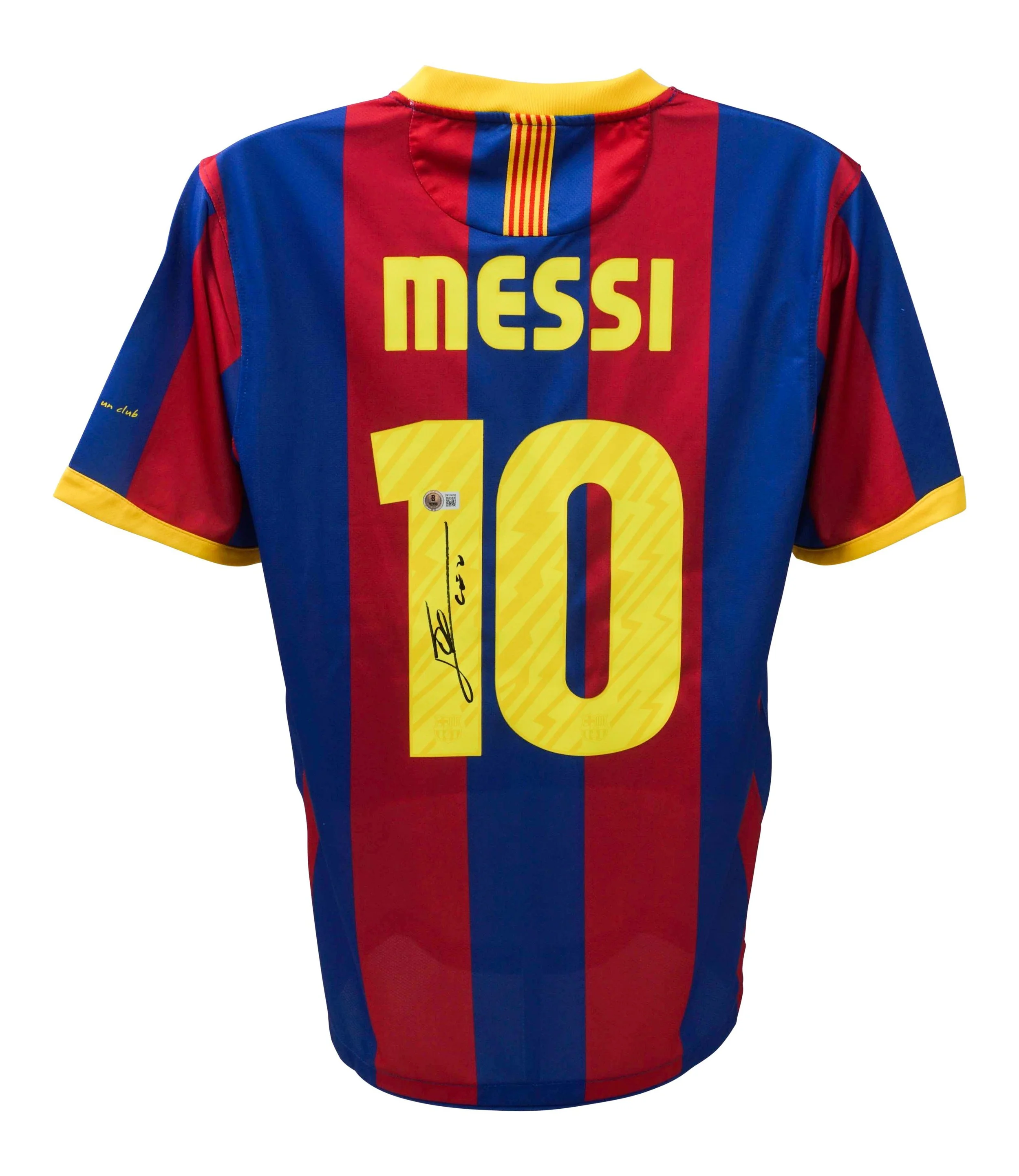
The 2011 Champions League final at Wembley, won by Barcelona 3-1, unfolded as a steady demonstration of how FC Barcelona controlled a match when everything was aligned, and how Lionel Messi fit at the center of it.
Against Manchester United, Barcelona dictated the tempo from the start, moving the ball with a patience that gradually wore the game down. Messi’s role in in this was that of a conductor — drifting into space, receiving the ball in deeper areas, and connecting everything around him.
His goal in this match, struck from distance through a narrow window, was reflective of that freedom. It was about a great player confidently seeing the moment, taking it cleanly, and reinforcing control.
Barcelona went on to win 3–1. The performance captured both Barcelona at its peak and Messi operating with complete authority within it.
4. Champions League Final Breakthrough, Barcelona vs. Manchester United (2009)
The 2009 Champions League final was the point where Lionel Messi stopped being viewed as a rising talent and started being treated as the defining player on the biggest stage in club football. Facing Manchester United, the reigning champions at the time, FC Barcelona quickly took control.
Messi’s goal, a looping header over Edwin van der Sar, wasn’t the type typically associated with his game. It didn’t rely on dribbling or buildup but came from timing, positioning, and an awareness of space, demonstrating his ever-expanding game.
Barcelona went on to win 2–0, completing a treble-winning season and marking the start of a period where both the club and Messi would reshape expectations at the highest levels.
3. World Cup Semifinal Masterclass (2022)
This semifinal against Croatia’s national football team offered a different look at Lionel Messi than earlier stages of his career. Messi opened the scoring from the penalty spot, setting the tone for Argentina, but his defining moment came later.
Receiving the ball on the right side, he drew in Joško Gvardiol and carried the play toward the end line, holding position long enough to create space before delivering a precise pass that set up the third goal of the match. It was a sequence that relied on balance and awareness more than speed.
Argentina went on to win 3–0, with the performance capturing a version of Messi that could still dictate the biggest games, but without needing to dominate every touch.
2. Copa América Victory, Argentina vs Brazil (2021)
For years, the international chapter of Lionel Messi’s career carried a different tone than everything he had done at the club level. He created changes, reached finals, a regularly displayed his athleticism and individual brilliance, but the endings never quite matched the performance.
By the time the 2021 Copa América arrived, that pattern had started to define the conversation around him.
Throughout the tournament, however, Argentina’s run was steady with Messi involved in nearly every phase of their attack. He finished as the tournament’s joint top scorer and clear assist leader, setting the tempo in Argentina’s matches.
The final against Brazil at the Maracanã carried its own weight, given the opponent and the setting. Argentina won 1–0, securing their first major title in nearly three decades and giving Messi his first senior international trophy.
That outcome shifted the tone of his career. The questions that followed him for years gave way to a sense that his team success was beginning to align with everything else he had already accomplished.
1. World Cup Victory (2022)
The win over Brazil in 2021 started shifting the conversation, but this was the moment that closed it for good. For years, Lionel Messi was tied to a narrative that separated his individual brilliance from team success on the international stage. This World Cup victory essentially ended this narrative.
The final against France didn’t unfold in a straight line, which made what Messi did stand out even more. Argentina controlled long stretches early, and Messi set that tone himself, converting a penalty and later finishing a composed sequence in extra time.
France pushed back, the scoreline tightened, and the game moved into penalties. After a 3–3 draw, Argentina won the shootout 4–2, securing the World Cup and completing the one major achievement that had remained outside Messi’s career.
By the end of that night, there wasn’t much left to debate. The international résumé matched everything he had built at the club level, and the version of Messi that lifted the trophy secured its legend and its place as the greatest soccer player — perhaps even the best male athlete — of all time.
What comes next for the GOAT?
No career in soccer history has been documented, debated, and celebrated quite like Lionel Messi's. From a teenager dazzling at Camp Nou to a 39-year-old lining up for what could be his last World Cup, the through line has always been the same: an almost unreasonable ability to rise in the moments that matter most.
The 10 milestones above don't just tell the story of a great player. They trace the arc of someone who kept redefining what greatness looked like, across clubs, continents, and decades.
Now, with the 2026 FIFA World Cup underway in the United States, Canada, and Mexico, Messi has one final opportunity to add to a legacy that most would argue needed nothing more added to it. Whether Argentina goes deep or bows out early, whether Messi dominates or plays a supporting role, the result won't change what he already is.
But sport has a way of giving us moments we didn't know we needed. And if there's one player in history who has earned the right to one more of them, it's this one.
Head on over to Pristine Auction and check out all the signed Messi and signed soccer memorabilia you’ve been looking for.
Frequently Asked Questions About Lionel Messi
Is Messi playing in the 2026 World Cup?
Yes, Lionel Messi has been named to Argentina's official 26-player squad for the 2026 FIFA World Cup. His participation had been a topic of discussion after he dealt with a hamstring issue late in the MLS season, but he was confirmed fit and selected by manager Lionel Scaloni. Argentina begins its title defense in Group J alongside Austria, Algeria, and Jordan.
How old is Lionel Messi in 2026?
Messi turns 39 during the 2026 World Cup tournament, making him one of the oldest players to ever compete at the event. Despite his age, he has remained one of the most productive players in MLS this season, recording 19 goal contributions in just 14 matches for Inter Miami heading into the tournament.
Has Messi ever won the World Cup?
Yes. Messi won his first FIFA World Cup in 2022 with Argentina, defeating France in a penalty shootout after a 3–3 draw in the final. He scored twice in the match and was awarded the Golden Ball as the tournament's best player. The victory completed his collection of every major honor the sport has to offer.
What is Lionel Messi's greatest career moment?
While opinions will always vary, the 2022 World Cup victory stands as the defining moment of Messi's career. It resolved the one major narrative that had followed him for years — that his individual brilliance hadn't translated to international team success — and cemented his place as the greatest soccer player of all time.
How many World Cups has Messi played in?
The 2026 tournament is Messi's sixth World Cup, a record he shares with Cristiano Ronaldo. His debut came at the 2006 World Cup in Germany, and he has been a central figure for Argentina in every tournament since. No male player in history has appeared in more World Cup tournaments.
Is the 2026 World Cup Messi's last?
Almost certainly yes. Messi himself has strongly suggested that 2026 represents his final World Cup, and at 39, the math makes another tournament in 2030 nearly impossible. That reality adds a layer of significance to every match Argentina plays this summer, giving fans what could be their last opportunity to watch the greatest player of his generation on the sport's biggest stage.